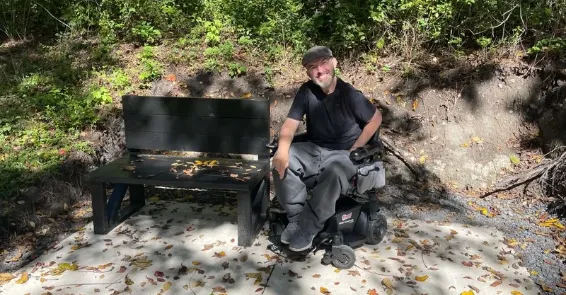
New Benches Bring More Access to Newark’s Canal Trail
Five accessible benches are now in place along roughly three-quarters of a mile of the Erie Canalway Trail, with two more on the way.
By Jo Crockett
John and I are proud to have joined the Newark Accessibility Committee and to be part of our community’s growing commitment to inclusion. I’m still pretty new to this work, and one of the biggest things I’m learning is that accessibility is often about the little things that many of us don’t think twice about — until we, or someone we love, needs them.
Newark’s accessibility efforts bring together community members, Village leaders, educators and local organizations, working with Rochester Accessible Adventures to identify barriers and make community spaces, events and recreation more welcoming. Through accessibility education, site assessments and a Strategic Inclusion Action Plan, this partnership is helping us look at Newark through different perspectives and better understand how people with different abilities experience our community.
For my first article for Your Newark News, I wanted to start with one improvement that people can actually get out and use right now.
Five New Accessible Benches Along the Canal Trail
There are now five new accessible benches installed along the Erie Canalway Trail between T. Spencer Knight Park and Edgett Street, with two additional benches on the way.
The distance between the two ends is approximately three-quarters of a mile, making this a great section of trail for someone who wants to get outside, enjoy the canal and take in the scenery without committing to a much longer walk.
Just as importantly, there is accessible parking available from either direction. On the eastern end, parking is available in the T. Spencer Knight Park/Van Buren Street area. On the western end, accessible parking is available at Edgett Street Newark Canal Park. That gives visitors some flexibility. You can choose the end that works best for you rather than having only one practical place to start.
The trail surface along this section is suitable for wheelchairs, mobility devices, walkers and strollers, making it one of the areas of Newark where people with different mobility needs can enjoy the same recreational space together.
And that last part matters.
More Than Just a Place to Sit
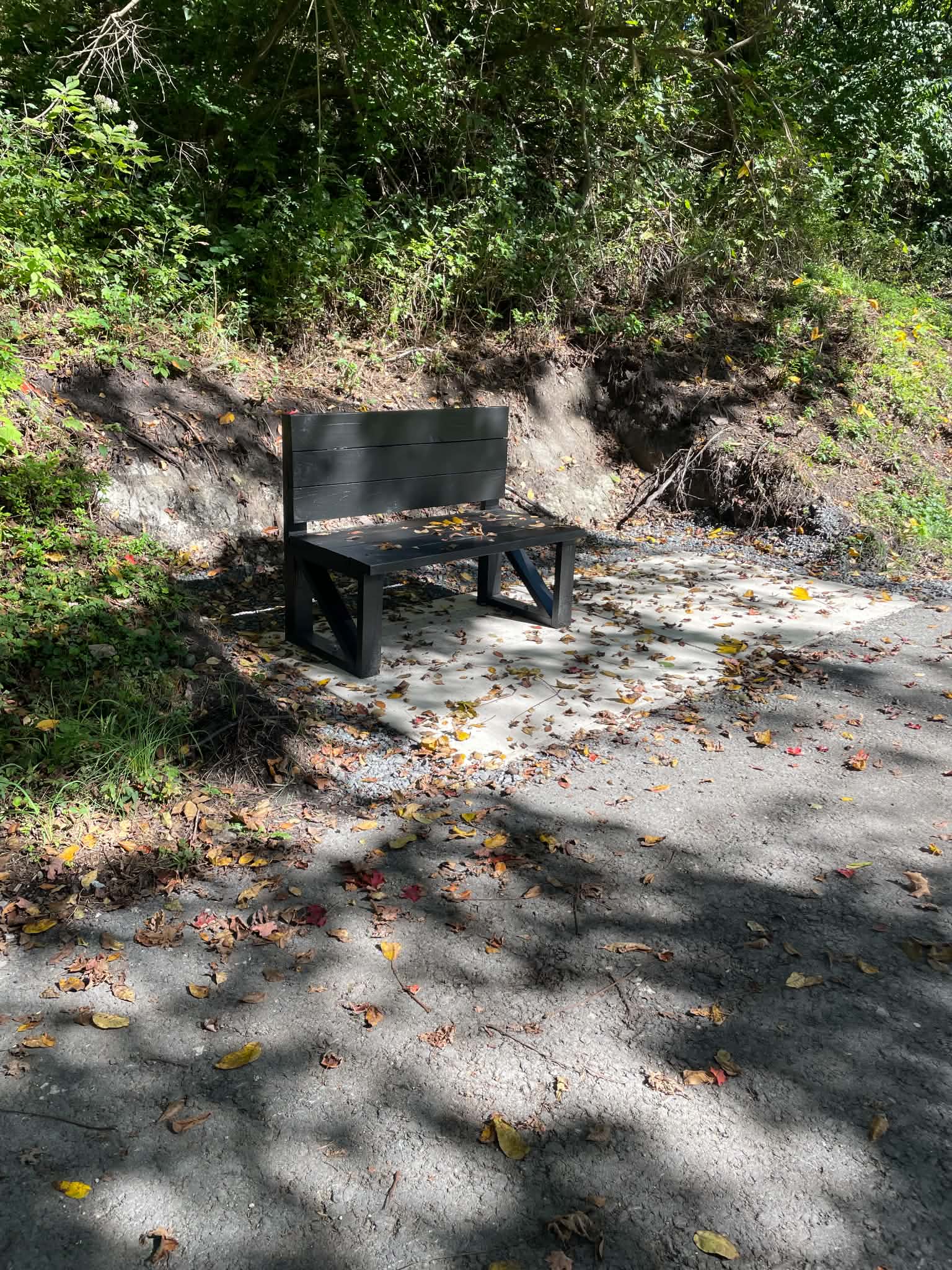
What I especially appreciate about the new benches is the thought given not only to the seat itself, but to the space around it.
The benches sit on concrete pads that extend alongside the seating area, leaving room for someone using a wheelchair or other mobility device to pull alongside a friend or family member rather than having to remain in front of or behind the bench.
It is a relatively simple design feature, but it changes the experience. Accessibility should not mean creating a separate place for someone with a disability. Whenever possible, it should mean creating spaces where people can experience their community together.
The benches also provide regular opportunities to stop and rest along the route. That can make the trail more manageable for someone using a walker or cane, an older adult, someone recovering from an injury, a person living with chronic pain or fatigue, or simply someone who needs to know there will be a place to rest before deciding whether to make the trip.
Sometimes accessibility is about whether someone can technically get into a space. But meaningful accessibility asks another question: Can they comfortably use and enjoy it once they get there?
Accessibility Takes Many Forms
One of the things I hope to share through future articles is that accessibility reaches much further than any single diagnosis, disability or mobility device.
Some needs are visible and others are not. Someone with sensory sensitivities may need a quiet place to stop and regroup. Another person may need clear directions or readable information. People may encounter barriers related to vision, hearing, mobility, communication, cognitive differences, fatigue or medical conditions.
That means making a community more accessible is not a project that is ever really “finished.” It is an ongoing process. It means looking at familiar places from perspectives we may not personally experience. It means listening to the people who use those spaces. And it means being willing to make changes when we discover something isn't working as well as it could.
These new benches are one example of that work.
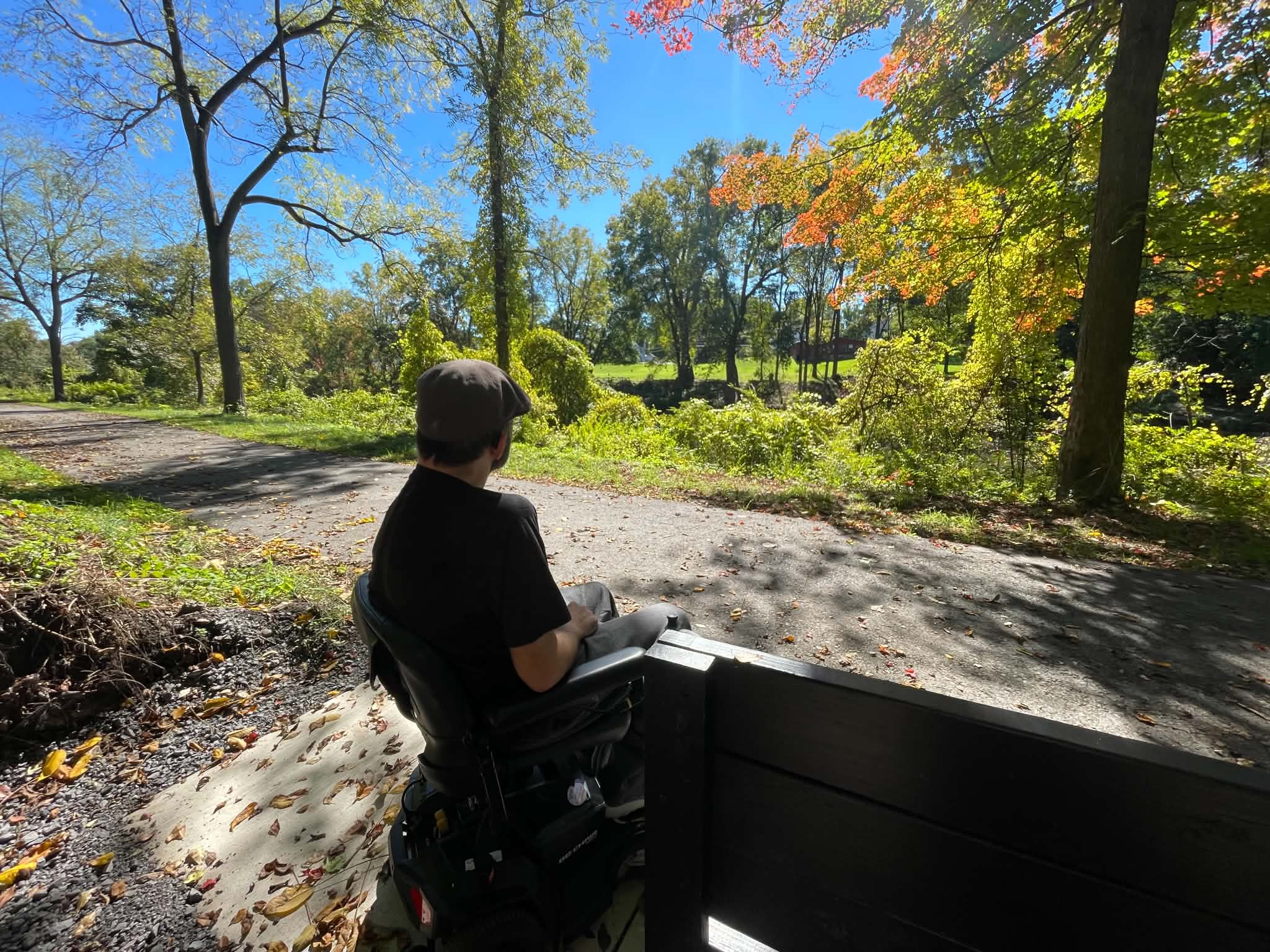
Families pushing strollers can use them. Grandparents can use them. Someone walking with a cane can use them. A person using a wheelchair can stop alongside the person they came with. Someone who simply cannot comfortably walk three-quarters of a mile without resting now has more opportunities to enjoy the trail.
And that's something I think is really important to remember: Accessibility improvements often benefit far more people than the group we originally had in mind.
Know Before You Go
Planning to explore this section of Newark’s Erie Canalway Trail? Here are a few things to know before you head out:
Trail section: T. Spencer Knight Park west to Edgett Street
Distance: Approximately ¾ mile from end to end
Accessible benches: Five new accessible benches are currently installed, with two more on the way. The benches are spaced approximately every 300 feet along this section of trail, providing frequent opportunities to stop and rest.
Bench design: Concrete pads extend beside the benches, providing space for someone using a wheelchair or mobility device to stop alongside the seating area.
Trail surface: Wheelchair, mobility device, walker and stroller friendly.
Eastern access: T. Spencer Knight Park / Van Buren Street area. Accessible parking is available. GPS: 43.047907, -77.093428
Western access: Edgett Street trail access. Accessible parking is available. GPS: 43.048976, -77.107900
Good to know: With accessible parking at both ends, a navigable trail surface and rest areas approximately every 300 feet, visitors can choose how much of the trail they want to explore based on their own comfort and mobility needs.
Thank you to the Village of Newark for installing these benches and continuing to look at ways more people can enjoy our community spaces with greater independence.
John and I are proud to be part of the Newark Accessibility Committee, but we are also coming into this ready to learn. There will be places where Newark is doing things well, places where improvements are already underway and undoubtedly places where we still have work to do. And honestly, I think that's okay.
That is part of why I am excited to write about accessibility for Your Newark News. I hope these articles can do more than simply announce improvements. I want them to help people know what is accessible, where it is, what they can expect when they arrive and where barriers may still exist.
Most importantly, I hope we can listen to the people who actually use these spaces. Their experiences are what will help us understand what is working and what needs to come next.
This is just the beginning.